

By Ryan Forrest, RevOps and sales
Short answer: A deal belongs in commit only when the buyer is taking action, you know who signs, and you can walk every step to a signed contract. Ask five questions about it. If the rep can't answer all five with facts, the deal is best case, not commit.
"I feel really good about this one."
That might be the most costly sentence in a forecast call. A good feeling is not a plan. And when a few of those deals slip, the whole number slips with them.
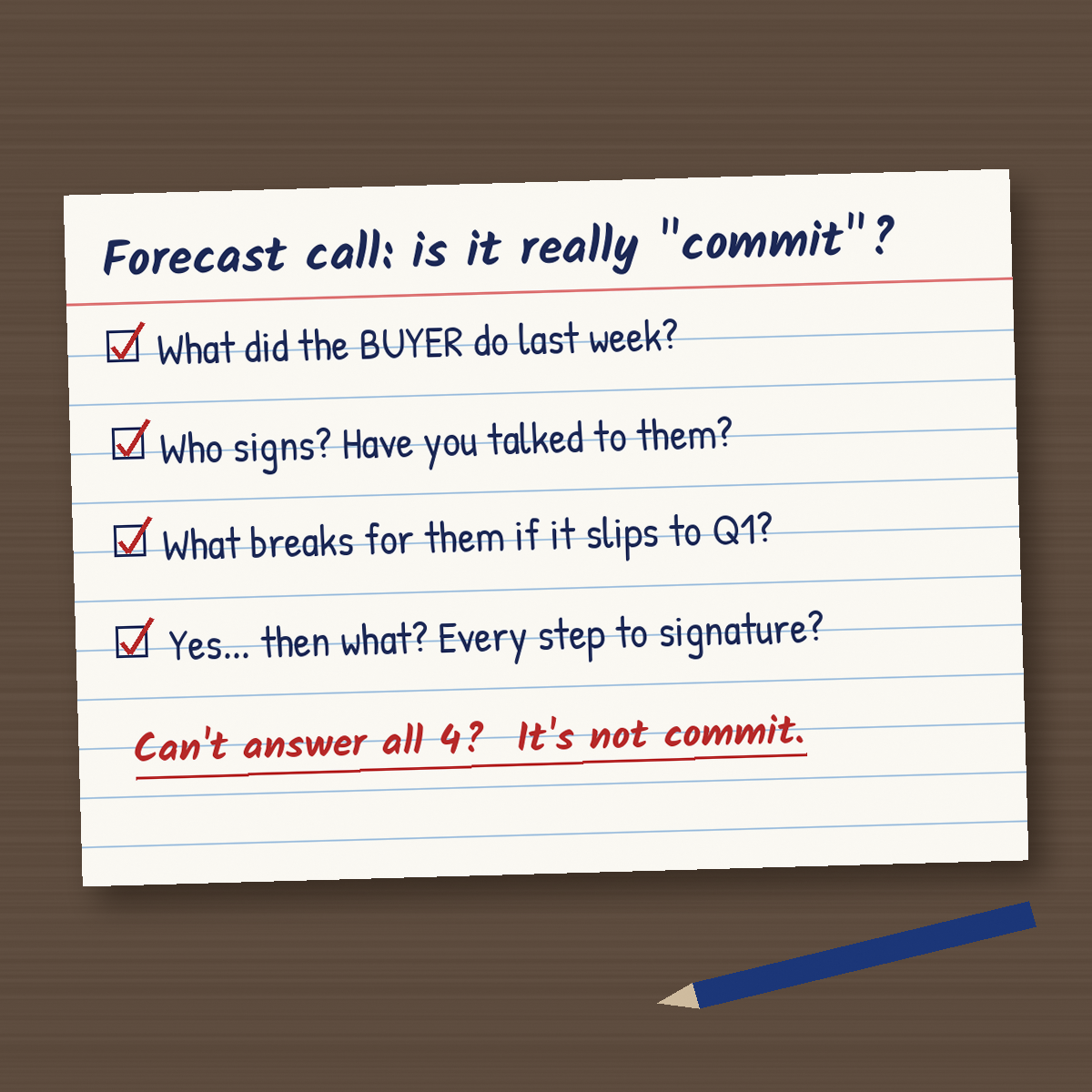
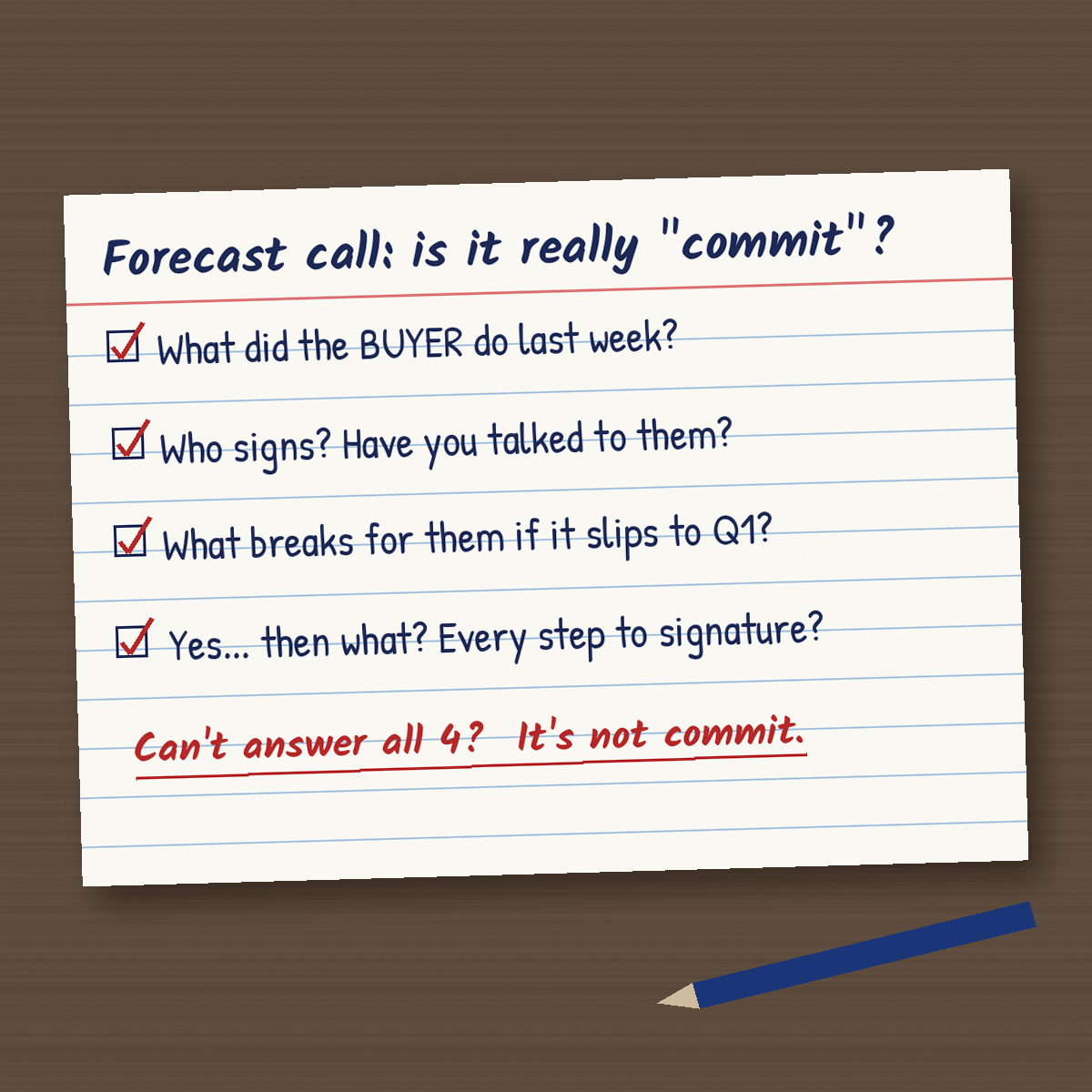
So here is the check I use. It takes about two minutes per deal. I shared the first four questions on LinkedIn on this card. Here I add a fifth one, plus how to build the check into HubSpot.
What does "commit" mean in a sales forecast?
Commit means you are telling your boss, "This deal will close this period. Count on it."
Most teams sort deals into a few groups. Pipeline means it could close someday. Best case means it might close this period if things go well. Commit means it will close, and you would bet your name on it.
That last group is the one your leaders use to plan. They use it to hire, spend, and set targets. So a bad commit deal hurts more than a bad pipeline deal.
Why do deals in commit fall through?
Most of the time, it's not bad luck. The deal was never as far along as it looked.
Here are the usual reasons:
- The rep likes the buyer, so the deal feels closer than it is.
- The person you talk to is not the person who signs.
- Nobody knows about the legal or security review until the last week.
- The buyer has no real reason to buy now, so they wait.
- The deal has no next step, so nothing happens.
Each of the five questions below targets one of these gaps.
What are the 5 questions to ask before a deal goes in commit?
1. What did the buyer do last week?
Ask about their actions, not yours. "We sent a proposal" is your action. "They set up a call with their boss" is theirs.
A real deal moves because the buyer moves. If the buyer has gone quiet, the deal is not in commit.
2. Who signs, and have you talked to them?
Get a name. Then ask if the rep has spoken to that person, or at least been in a meeting with them.
A lot of deals die because the champion loved you, but the person who signs had never heard of you.
3. What happens on their side if this slips a month?
This tests the reason to buy now. If the honest answer is "nothing much," the buyer has no reason to rush.
Good answers sound like this: "Their old contract ends on the 31st." Or: "Their new team starts in January and needs the tool."
4. They say yes. Then what?
Keep asking "then what?" until you reach a signed contract. Walk it step by step. Who reviews the terms? Is there a security check? Does finance need a purchase order? How long does each step take?
If the steps don't fit before the end of the period, the deal can't close in the period. It's that simple.
5. What is the next step, and when is it?
Every commit deal needs a next step with a date on the calendar. A real one, like "Legal call Tuesday at 2." Not "follow up."
No next step? Then nobody is driving the deal.
The rule: If the rep can't answer all five with facts, move the deal to best case. You can move it back the minute the answers show up.
How do I check commit deals in HubSpot?
You can build most of these checks right into your pipeline. Here are three steps that work well.
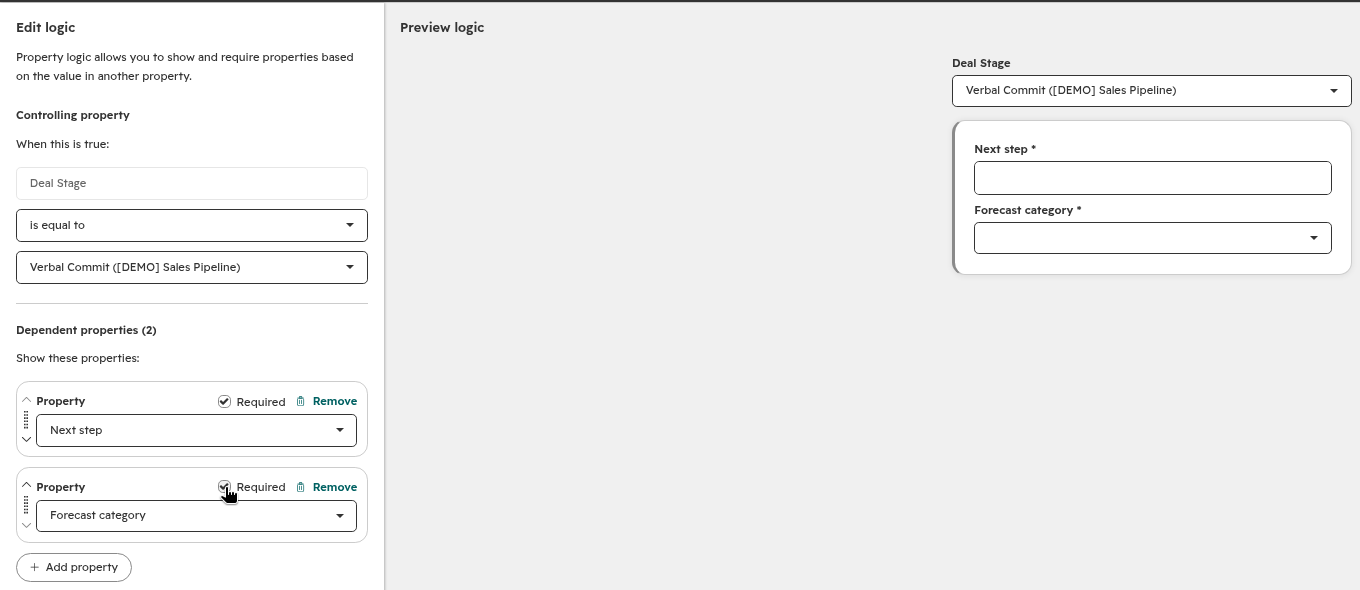
Step 1: Make key fields required before a deal can reach the commit stage. In HubSpot, you can set required properties for each deal stage. In my demo pipeline, a deal can't move into Verbal Commit without a Next step and a Forecast category.
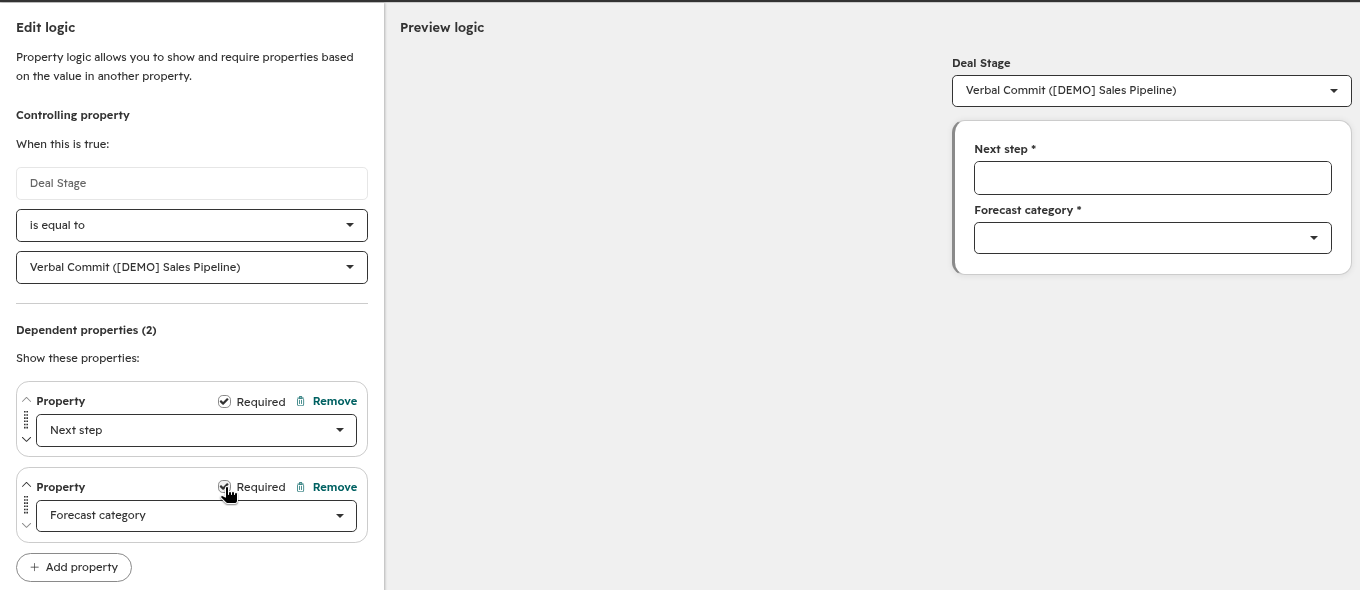
To set it up, go to your deal pipeline settings, pick the stage, and choose which properties a rep must fill in. Start with next step, close date, and amount.
Step 2: Find deals with no next step. Filter your deals view to "Next step is unknown." Then add a filter for your commit stage or forecast category. That list is your first cleanup job before any forecast call.

In my demo pipeline, four open deals had no next step. That was $167,000 with no plan.
Step 3: Add the five questions as deal properties. Make a short text field for each one, such as "Buyer action last week" and "Who signs." Reps fill them in when they mark a deal as commit. Now the answers live in the CRM, not in someone's head.
Can AI help me check if a deal is real?
Yes, but only if your CRM is up to date. AI can only read what's there.
Here is a simple way to use it. Before your forecast call, open a commit deal and ask Breeze, HubSpot's built-in AI, to sum up the recent emails, calls, and notes on that deal. Then compare that summary to the five questions.
If the summary shows no buyer action in two weeks, that's your answer. If the notes never mention who signs, that's your answer too.
One warning: AI sounds sure of itself even when the data is thin. If the next step is blank and nobody has logged a call, the summary is a guess. Clean data first, then AI.
FAQ
How many deals should be in commit? There is no magic number. What matters is that each one passes the five questions. A small, honest commit beats a big, hopeful one.
What's the difference between commit and best case? Commit means you are confident it closes this period, and you have facts to back it up. Best case means it could close if a few things go right.
Who should ask these questions, the rep or the manager? Both. Reps should ask themselves before they call a deal commit. Managers should ask again in the forecast call.
What if a rep pushes back? Keep it about facts, not feelings. You're not saying the deal is bad. You're saying it needs one more answer before it counts.
How often should I review commit deals? Once a week is a good start. Do it the day before your forecast call, so reps have time to fill in gaps.
The bottom line
A forecast is only as good as the deals in it. Five plain questions can save you from a bad surprise at the end of the quarter.
Try them on your top three commit deals this week. You'll learn a lot fast.
If you want more simple sales checks like this one, I write about them in Fractional Insights, my free newsletter. And if your reps struggle when buyers push back, grab my free Objection Wheel guide.